Want to know your webpage's ranking for keywords on Google? Want to automatically track ranking changes and visualize the results daily? Traditional SEO tools are expensive and feature-intensive, while building your own lightweight Google Rank Tracker saves money and gives you complete control over your data flow.
We'll show you how to build a practical Google Rank Tracker system from scratch using Python, leveraging Search Infra's SERP API (a service focused on high-concurrency, low-latency search engine results data). This minimizes engineering complexity while maintaining high customizability. No need to deal with cumbersome anti-scraping logic; just focus on your business logic.
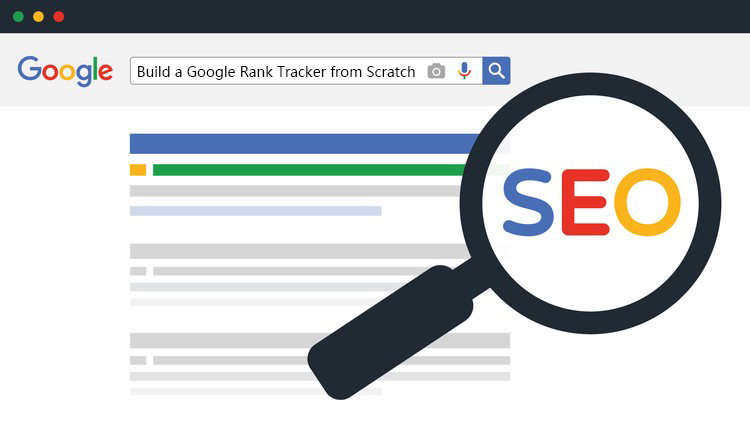
1. Why Build Your Own Rank Tracker?
Many keyword ranking monitoring tools on the market are expensive, and most platforms have their own restrictions on data sources, update frequency, and data permissions. Building your own Rank Tracker offers several key advantages:
✔ True control over your data, eliminating reliance on third-party monitoring dashboards
✔ Customizable ranking update cycles (e.g., daily, weekly)
✔ Precise capture of Google ranking information by region and language
✔ Fully scalable to SEO reporting, alerts, and analytics
2、Core Steps for Building a Rank Tracker
The process of building a Google Rank Tracker is quite clear, requiring only the following steps:
Obtain a Search Infra SERP API Key
Use Python to call the API to retrieve Google search results data
Extract keyword rankings from the structured data returned by the API
Regularly store and compare ranking changes
Optional: Build a visual dashboard or automated reporting
3、Obtain a Search Infra API Key
To call Search Infra's SERP API, you need to register and generate an API Key. After registering in the Search Infra console, you can start calling the API to retrieve Google search results data.
4、Call the SERP API using Python
With the API Key, you can use Python to make requests to retrieve Google SERP structured data. Search Infra's API supports parameters such as engine, keywords, and location. The returned data is already in JSON format, eliminating the need for manual HTML parsing, making it ideal for automation.
Below is a simplified example for retrieving keyword ranking results from Google:
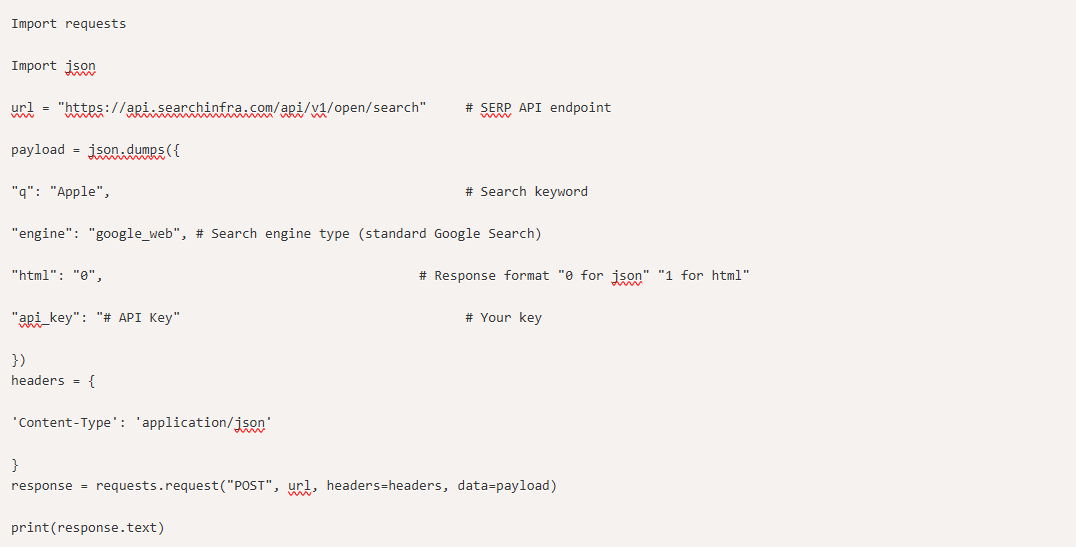
This example calls the Search Infra API and returns structured JSON data containing information such as the titles and links of organic search results. You can further extract the ranking position of each keyword as needed.
5、Practical Suggestions and Scale Optimization
Concurrency & Batch Support
The Search Infra platform supports high-concurrency requests and low-latency responses, making it ideal for large-scale ranking batch crawling.
Geographic Location and Language Customization
You can customize the crawling of Google ranking data for different regions based on different country and language parameters.
Data Storage Optimization
For a large number of keywords, it is recommended to use a database (such as PostgreSQL or MongoDB) to store historical rankings and add indexes to optimize query efficiency.
Building your own Google ranking tracker is no longer a complex undertaking; it can be achieved with just a stable SERP API and a clear automation process. Leveraging Search Infra Api high-concurrency, low-latency interface, you can automate ranking tracking into a daily task, providing powerful data support for SEO strategy, content optimization, and competitive analysis.
Search Infra
Author
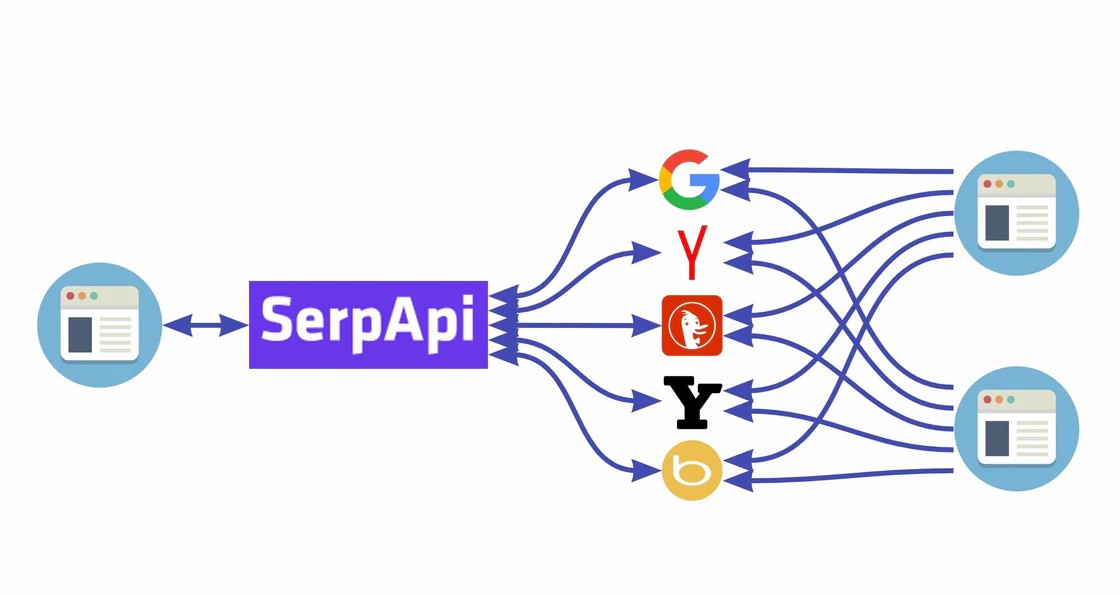
 SERP API
Serp API
Google API
 7-day free trial
Full features unlocked
No credit card needed
7-day free trial
Full features unlocked
No credit card needed
SERP API
Serp API
Google API
